The work before the walkout: reading a fight campaign
By Soreheads Editorial · 2026-10-16 · 2 min read

The public version of a boxing campaign often starts with a poster and ends with a clip. Between those two moments sits the preparation that gives the appearance its meaning.  Mitch Field’s campaign page offers one perspective on that middle section, connecting an advertised Yeppoon appearance against
 4ortune with a five-week promotional story.
The page is Team Mitch Field’s own campaign and sponsorship material. That makes it a primary source for how the appearance was presented, rather than independent verification of every audience or commercial claim. Its reach figures are not being reproduced here as audited totals.
More than a date on a card
A campaign page can show how a participant wants supporters to understand the commitment. It brings the preparation, public identity and proposed sponsor relationship into the same place. For a fan, that creates a way to follow the build-up before there is an outcome to discuss.
Our editorial view is that the most useful part of this material is its sequence. A named opponent and a defined campaign give the story a shape. The reader can see what was being prepared for, while the source remains accountable for the promises and descriptions it chose to publish.
That does not establish the contents of unseen training sessions. We have not reconstructed a camp schedule from a promotional image or assumed that a sponsorship package proves a particular training method. The campaign is evidence of the public presentation, with its own purpose and perspective.
Community is another part of preparation
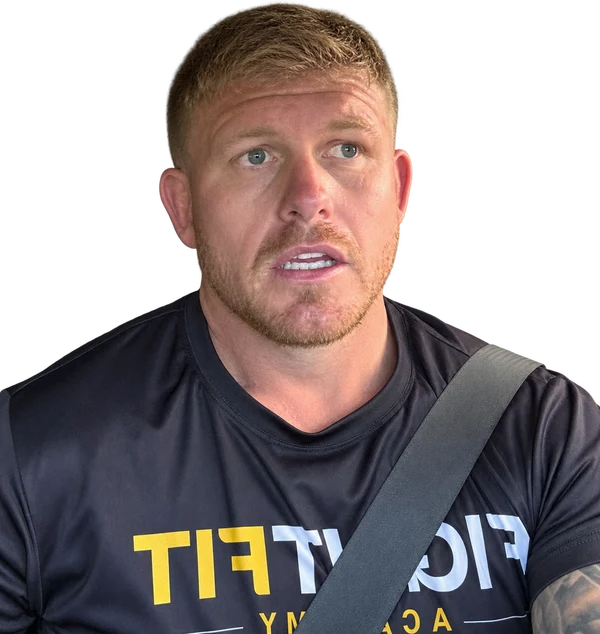 Clayton Cullen’s FightFit founder account provides a separate community angle within the wider Soreheads network. It describes the kind of community he wants to build around the platform. The RTG × Soreheads challenge is another connected campaign, presented as a six-week training initiative.
These projects should not be flattened into one universal programme. Mitch’s fight campaign, a founder’s community account and a branded challenge serve different purposes. Read together, however, they show how training can be part of the public conversation around a fight night rather than something fans only hear about after the fact.
For readers, that opens up several interests: the participant’s preparation, the community around a gym or the structure of an advertised challenge. The connections are useful as long as the coverage does not turn a promotion into a guarantee about results, health or personal transformation.
What stays useful after the event
Historical campaign material can continue to explain the build-up, even when its original offers are no longer current. A sponsorship page should not automatically become a live sales offer on a later website. An old challenge description should not be presented as a newly scheduled class without confirmation.
Soreheads keeps the campaign in its event context and connects the participants through their profiles. The training page provides the broader archive, while the news coverage explains what the original materials establish. That lets fans follow the preparation without confusing an earlier promotion with a current booking.
The walkout may be the moment people remember, but the public commitment before it deserves a place in the record too. Clear sourcing makes that preparation story readable long after the poster has stopped being new.
Source & publisher credits
Team Mitch Field: Inside Mitch Field’s five-week fight campaign
FightFit Community Club: Clayton Cullen’s FightFit community story